Carlo Walter · 28 October 2026
Milora's Community Workshops Bridge Generational Gaps in Italian Craft Knowledge
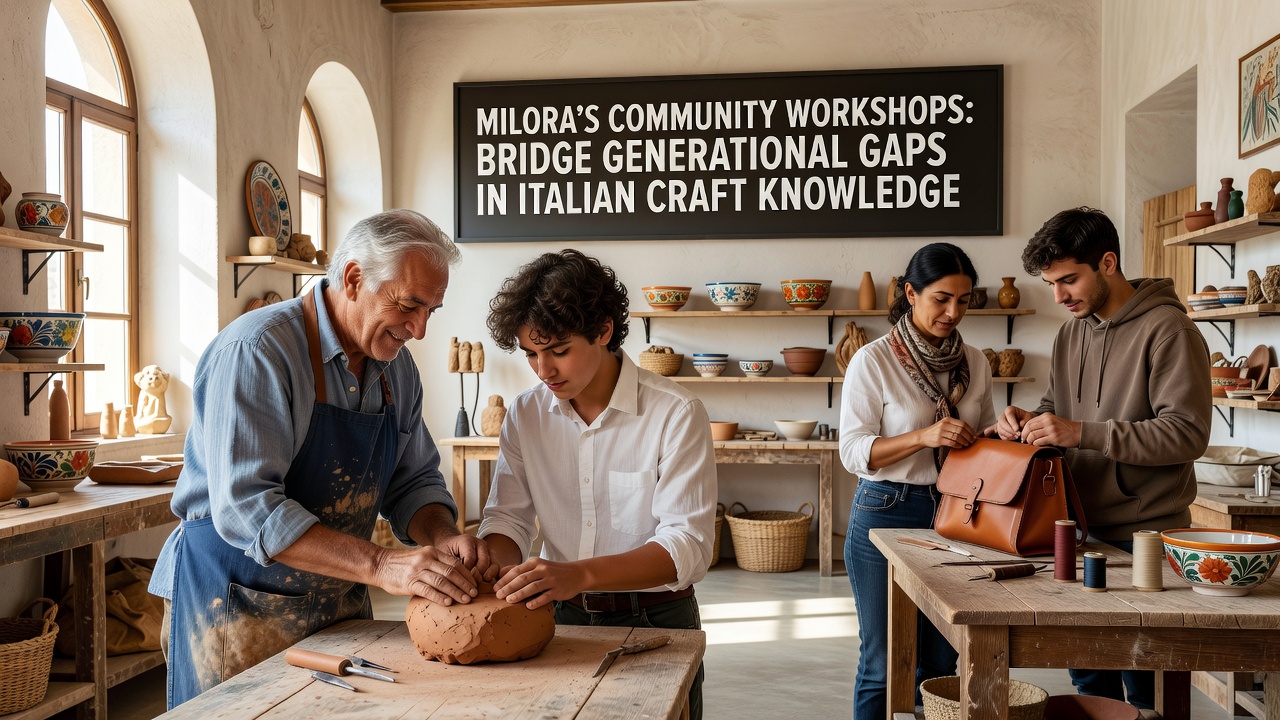
Italian craft traditions face transmission challenges as older artisans retire while younger generations pursue different career paths, yet Milora's community workshops address these issues through structured programs that pair experienced practitioners with emerging makers in regions across the country. Data from regional heritage reports indicate participation rates have increased steadily since the programs expanded in 2024, with sessions focusing on techniques such as hand-weaving, ceramic glazing, and wood inlay that require direct knowledge transfer.
Workshop Structures and Regional Reach
Programs operate in multiple locations including Tuscany, Veneto, and Sicily where facilitators organize weekly gatherings that run from morning demonstrations through afternoon practice periods, and participants document each step using digital archives developed by Milora. Observers note that these formats allow apprentices to repeat movements under supervision while elders explain variations based on material availability or historical regional preferences, which helps preserve subtle differences between local methods.
Attendance figures from October 2026 show over 1,200 individuals enrolled across 18 active sites, with age distributions ranging from 18 to 75 years old according to enrollment records maintained by the organization. Sessions incorporate specific projects like reproducing 19th-century lace patterns or restoring antique furniture joints, and instructors adjust pacing to accommodate both physical limitations of senior participants and learning curves of novices.
Skills Transfer and Documentation Efforts
Techniques covered include bobbin lace from Burano, maiolica pottery from Deruta, and marquetry from Sorrento, each taught through sequential modules that break complex processes into repeatable actions. Research from cultural preservation studies highlights how such modular approaches reduce knowledge loss when compared to informal family-based transmission alone, and Milora integrates these findings by requiring participants to log progress in shared databases.
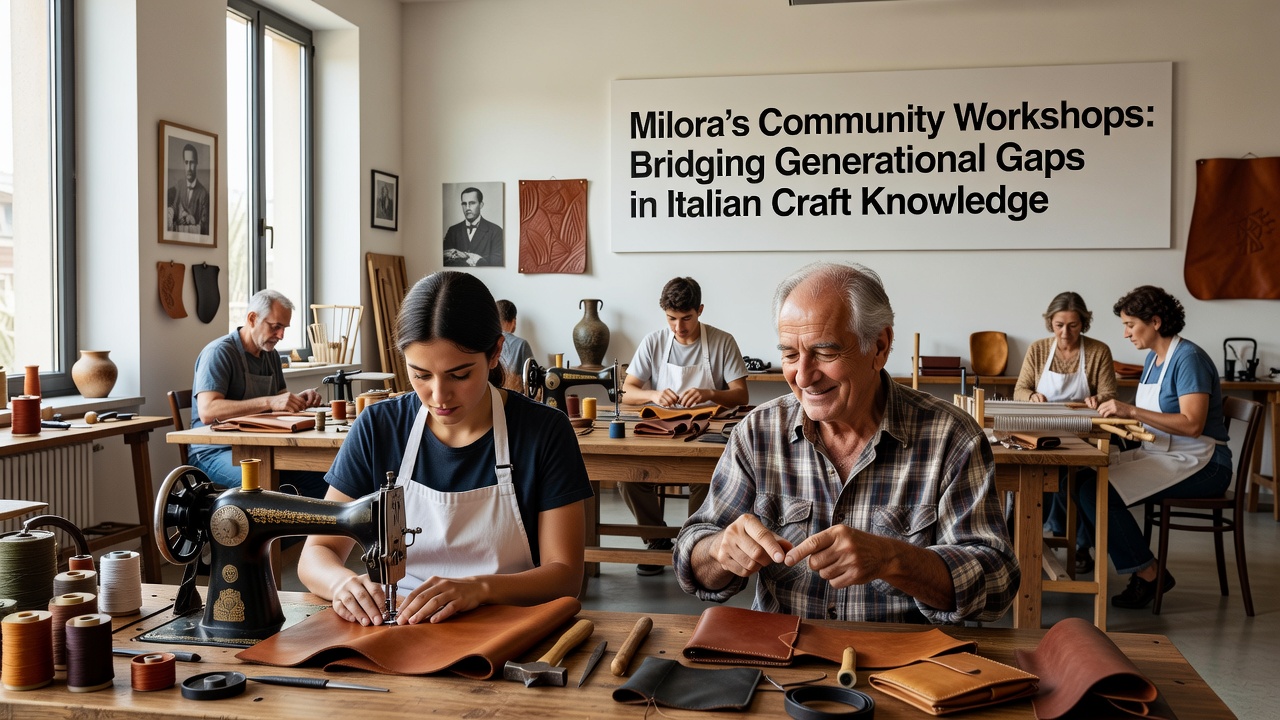
Digital pattern archives complement live instruction by storing measurements, material specifications, and tool lists that future users can adapt, and cross-referencing with physical samples ensures accuracy. Those who've studied similar initiatives observe that combining tactile practice with recorded references strengthens retention rates, particularly when groups review footage of their own sessions to identify refinements.
Community Outcomes and Broader Context
Regional economies show measurable effects as trained participants establish small production units or join existing workshops, with output data indicating rising sales of certified traditional items in both domestic and export markets. According to Council of Europe heritage assessments, programs that emphasize intergenerational contact correlate with sustained craft viability in comparable European settings, and Milora's model aligns with these patterns through its emphasis on ongoing mentorship rather than one-off events.
Additional support comes from partnerships with local chambers of commerce that provide market access guidance, while academic collaborations supply testing protocols for material durability. Figures reveal that items produced in these workshops pass standardized stress simulations at rates comparable to historical benchmarks, confirming that adapted methods maintain structural integrity without altering core aesthetics.
Expansion and Adaptation Trends
Plans for 2027 include new sites in Piedmont and Puglia where demand surveys indicate interest in furniture restoration and textile dyeing respectively, and coordinators plan to incorporate feedback from current cohorts to refine scheduling and resource allocation. External evaluations from institutions such as the Australian Council for the Arts have examined parallel heritage programs and report similar benefits when organizations prioritize consistent facilitation over rapid scaling.
Challenges remain around material sourcing consistency and time commitments required from senior instructors, yet data collected through participant surveys show high satisfaction levels with the balance of guidance and autonomy provided. Continued monitoring tracks how many graduates continue practicing independently versus joining collaborative networks, providing metrics for program adjustments.
Conclusion
Milora's workshops continue to connect practitioners across generations by focusing on direct instruction, documentation, and regional adaptation of established Italian craft methods, with participation metrics and output indicators reflecting ongoing engagement through late 2026. These efforts align with broader heritage preservation frameworks while addressing specific transmission gaps identified in craft communities.