Iris Wagner · 14 October 2026
Milora's Digital Pattern Archives: Cataloging Italian Craft Techniques for Future Adaptation
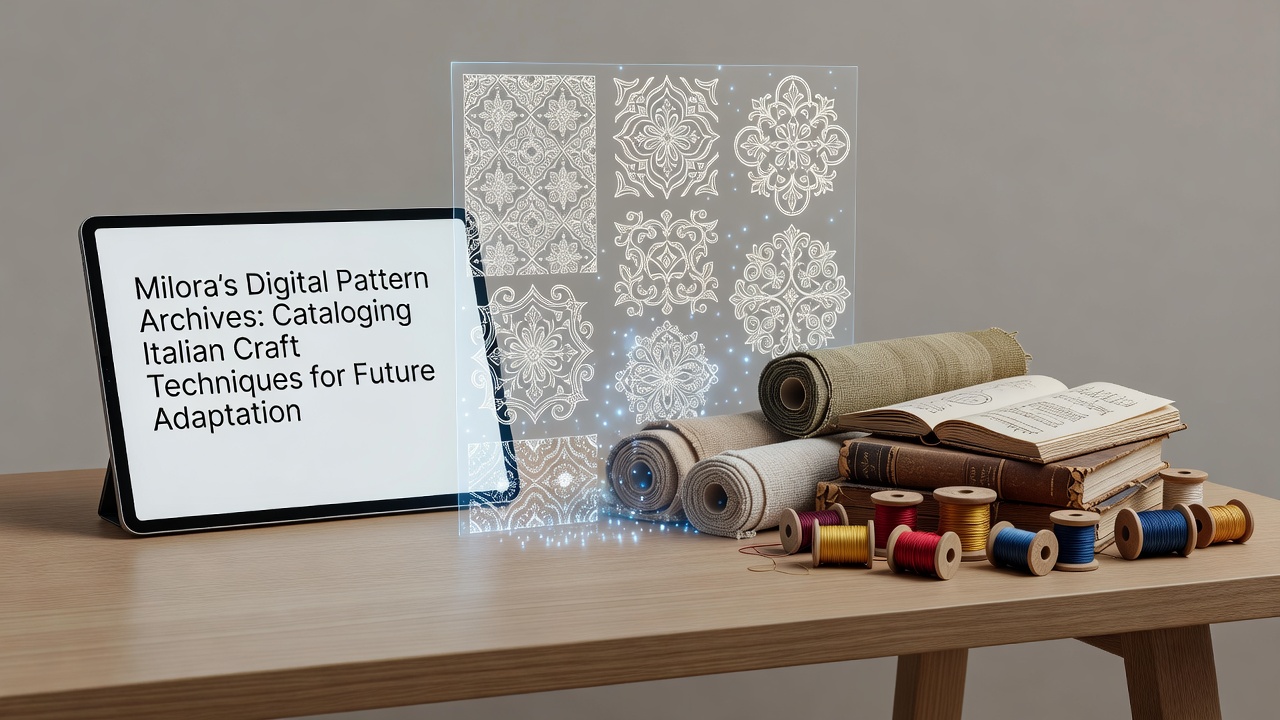
Italian craft traditions span centuries of regional specialization in weaving, ceramics, woodworking, and metalwork, and Milora's Digital Pattern Archives now translate these methods into accessible digital formats for contemporary use. The project began as an effort to record patterns and techniques that artisans developed across regions like Tuscany, Veneto, and Sicily, then expanded to include metadata on materials, tools, and production sequences. Researchers at the archives have scanned original pattern books, textile samples, and workshop notes, converting them into vector-based files that retain proportions and repeat structures while allowing adjustments for scale and material changes.
Origins and Growth of the Cataloging Effort
Work on the archives accelerated after initial partnerships with regional guilds provided access to private collections of 19th and early 20th-century pattern sheets. By October 2026 the database had incorporated more than 5,000 distinct entries covering techniques such as punto in aria lace construction, maiolica tile glazing sequences, and intarsia wood inlay layouts. Each entry records the original geographic source, the typical fiber or clay composition, and the sequence of steps required to reproduce the pattern by hand or machine. Data shows that cataloging teams prioritized techniques facing decline due to retiring practitioners, focusing first on those with fewer than ten active workshops still practicing them at full capacity.
Archivists collaborated with institutions including the Italian Ministry of Culture to verify historical accuracy before uploading files. The process involves high-resolution photography, 3D scanning of sample objects, and transcription of handwritten instructions into searchable text layers. One documented case involved a set of 1920s Umbrian weaving drafts that required cross-referencing with surviving loom setups to confirm thread counts and heddle arrangements.
Technical Methods Behind Digitization
Conversion of physical patterns into adaptable digital assets relies on standardized protocols for color matching, repeat tiling, and stress simulation. Software tools map traditional motifs onto new grids that support CNC routing or jacquard programming, while preserving the original symmetry rules. Files include layers for different material substitutions, such as replacing wool with recycled polyester while maintaining drape characteristics. Observers note that the archives also store comparative data from earlier manual reproductions, allowing users to track how pattern distortions occurred when artisans adapted older designs to faster production speeds.
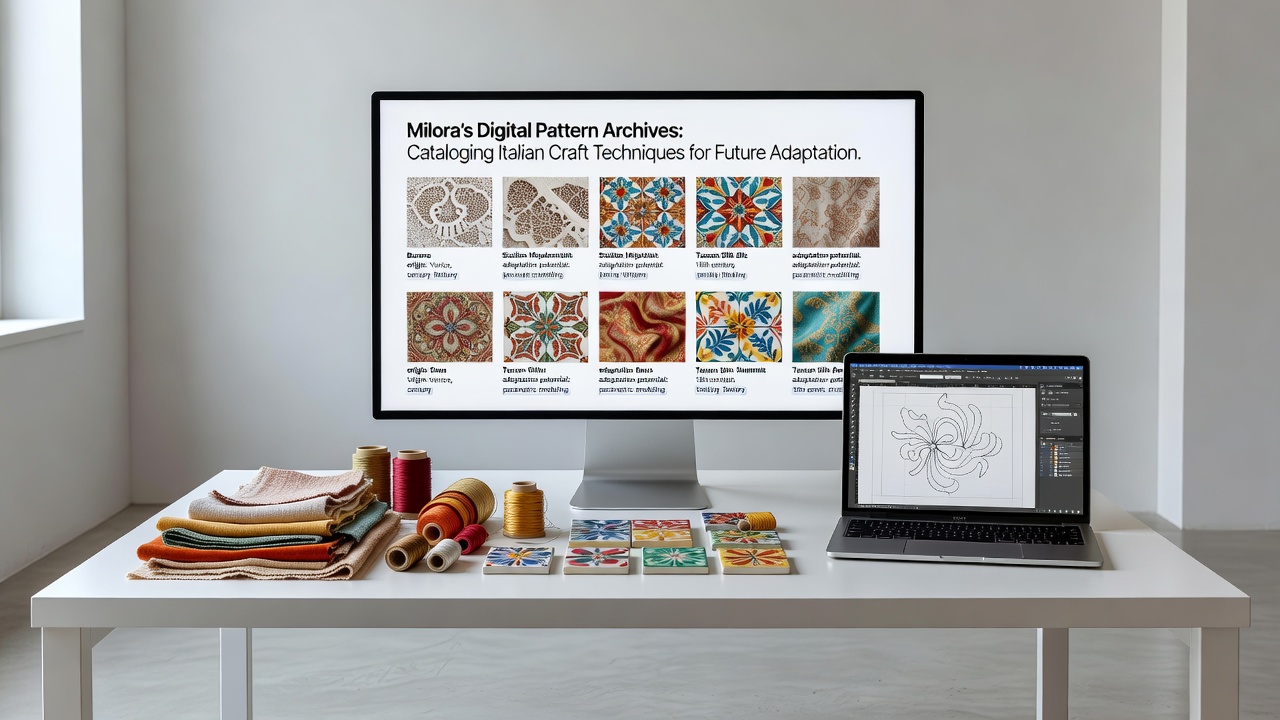
Quality control includes cross-checks against physical samples held at partner museums, and entries receive updates when new measurements become available from ongoing field documentation. The system flags patterns that share structural similarities across regions, revealing migration routes of specific motifs from coastal ports inland. Figures from the catalog indicate that approximately 40 percent of entries now link to multiple source locations, reflecting historical trade patterns rather than isolated invention.
Applications for Modern Adaptation
Designers access the archives through a subscription portal that supports export to common CAD and textile design programs. Adaptation examples include conversion of 18th-century Genoese velvet patterns into laser-cut leather panels for seating, and translation of Apulian ceramic border motifs into digital prints on acoustic wall tiles. Training modules within the platform walk users through parameter adjustments that maintain cultural identifiers while meeting current performance standards for durability and fire resistance. Data from participating studios shows that projects drawing directly from the archives have reduced development time for new collections by an average of three weeks compared with starting from scratch.
Regional economies have seen secondary effects as smaller workshops gain remote access to pattern libraries previously held in private collections. The archives supply reference files that allow these makers to quote on larger contracts requiring consistent repeats across multiple production runs. External reports from the European Commission on cultural heritage digitization highlight similar initiatives across member states as models for balancing preservation with commercial reuse.
Future Integration and Access Expansion
Plans announced for late 2026 include integration with parametric modeling software used in architecture, enabling direct import of motif data into building facade systems. Additional metadata layers will record environmental conditions under which original techniques were practiced, such as humidity ranges for natural dye application, to guide material substitutions in climate-controlled factories. Partnerships with academic programs at institutions outside Italy have begun to test cross-cultural applications, including overlaying Italian repeat structures onto Australian timber carving traditions for hybrid furniture lines.
Access metrics indicate steady growth in downloads from both European and North American users, with peak activity occurring during seasonal collection planning cycles. The archives continue to add entries as new documentation arrives from fieldwork in remaining active workshops, maintaining a rolling update schedule that prioritizes techniques with the narrowest practitioner base.
Conclusion
The Digital Pattern Archives function as a growing reference system that records Italian craft methods in formats ready for technical reuse. By maintaining detailed records of process steps alongside visual data, the project supports adaptation across industries while preserving the structural logic of historical patterns. Ongoing additions and software linkages position the archives as a central resource for makers seeking documented techniques that originated in specific Italian regions.